


I often think of how lucky I am that I perpetrated my scandal in the infancy of the internet age.
The confirmation of this came over the course of the past few weeks, as I paid attention to the coverage of Jason Arday, a British academic who resigned from a post at Cambridge University after accusations of plagiarism and falsification of research. Over the weekend, the news came that the authorities believe that Arday killed himself.
We have a lot in common. We were both Black men at the height of our professions, at what were considered, for each, relatively young ages. Our scandals both involved plagiarism and fabrication. Both ignited significant debates about diversity initiatives. Each of our scandals attracted considerable media attention. There were, it appears, in retrospect, for both of us, significant mental health concerns at play.
This morning I woke to an alert that was attacking a wrtier who accused the media of a high-tech lynching of Arday. Before I could even weigh whether the argument held up, I found myself thinking about how we conduct these high-tech hunting expeditions across news publications and social media apps every day. My one quibble with the idea would be to suggest we confine it to just Blacks. We are relentlessly cruel to flesh and blood humans who find themselves, by their own hand or involuntarily, sucked into the vortex that sits below the media spotlight.
The internet has made it so easy to make us think we know people, but whether we love them or hate them, all we know is cartoon character or cardboard cutout versions of real people who think, feel, struggle, love, are loved, and are much more complicated than a tweet or TikTok reel.
To some extent, it has always been the case that we have had distance from people who are covered. We didn’t really know Gary Hart in 1987 when The Miami Herald broke the scandal about his affair with Donna Rice. I had probably literally seen more cartoons and caricatures of Richard Nixon than actual photos by the time I was a young reporter. And it’s not to say the old media always got it right. It took a decade to realize we did not know a thing about Wen Ho Lee, the Los Alamos Laboratory scientist who was wrongly suspected of spying for China.
But there is a difference between the impact of flawed gatekeepers and an angry mob.
It was February of 1994 when I really fell in love with journalism. It was an odd beginning to a love affair. A classmate and his cousin had been murdered in a rural area during winter break from high school in our suburban neighborhood. A reporter from our local newspaper, The Washington Post, did an explanatory feature on the case and the investigation that put to bed some of the rumors that were swirling, provided helpful information, and gave our school and our community a forum to mourn.
I was thinking about how that would have played out in the modern era. The local paper, The Washington Post, has reduced its Metro section to ashes. Maybe a reporter would have come out. Maybe they wouldn’t have. Posts from our classmates, neighbors and randos would become the news information highway. God forbid it become a true crime story, then the conspiracy theorists would come in, just as they do with any big cases, and in politics and on topics that touch on hot-button issues, as Arday’s did on diversity. We probably would have been flooded with thousands more words per day than The Post story was — along with videos — and would have been none the wiser for it. We would have a ton of data, and still not a clue about what happened one winter day at Braddock Road.
The aftermath of my scandal resulted in multi-week, front-page coverage in The Post, The New York Times, the Wall Street Journal, The New York Post, The Times of London, Newsweek and anything, it seemed, that was printed on dead tree and had a news website. Most of my family, friends and former colleagues and classmates found out about it on CNN, Fox News or the local television station. I couldn’t make it a block in New York City without being recognized by multiple people. The big city, which I loved for the anonymity of it all, can become a small world when you are in the headlines.
But I had refuges that are not as available to modern-day newsmakers, like Arday (I also had the advantage of living in a lower-income Black neighborhood where no one cared what happened at The Times and with some young Polish-Americans who were prone to weighing any bad action against Stalin, which will keep things in perspective).
I tried to minimize how much I left my apartment during the daytime, doing things like late-night runs just before close to the Barnes & Noble in Union Square to grab books. When my family came up to visit after I got out of a psychiatric hospital, I asked to go to Kingston, New York. Why Kingston? It was not New York City. And the last thing that made news there was the October 1777 burning of the city during the Battle of Saratoga. The sum total of my electronic device countermeasures involved changing my cell phone number after Newsweek published my old business card and disconnecting cable.
There was no minicomputer sitting in my pocket that had algorithmically been optimized to go ping and ding every second some random person posted something about something that I was interested in. As flawed as social media algorithms are, I suspect they would have calculated I would have been interested in me. They would have been so right and so wrong. I also didn’t have that same little microcomputer to read countless Reddit threads or see what my former colleagues, and former friends were saying. Somewhere around the moment where I saw one of my one-time closet friends writing a self-important letter to the editor about me, I stopped, at least for a while, reading newspapers.
This current era does not offer that same luxury of ease in terms of escape. We talk a lot about the importance of free speech, but we don’t talk as much about the responsibility that should come with it. Just because you can say something does not mean you should, and if you attack someone relentlessly online, their suicide is not the time to get precious about having the finger pointed back at you.
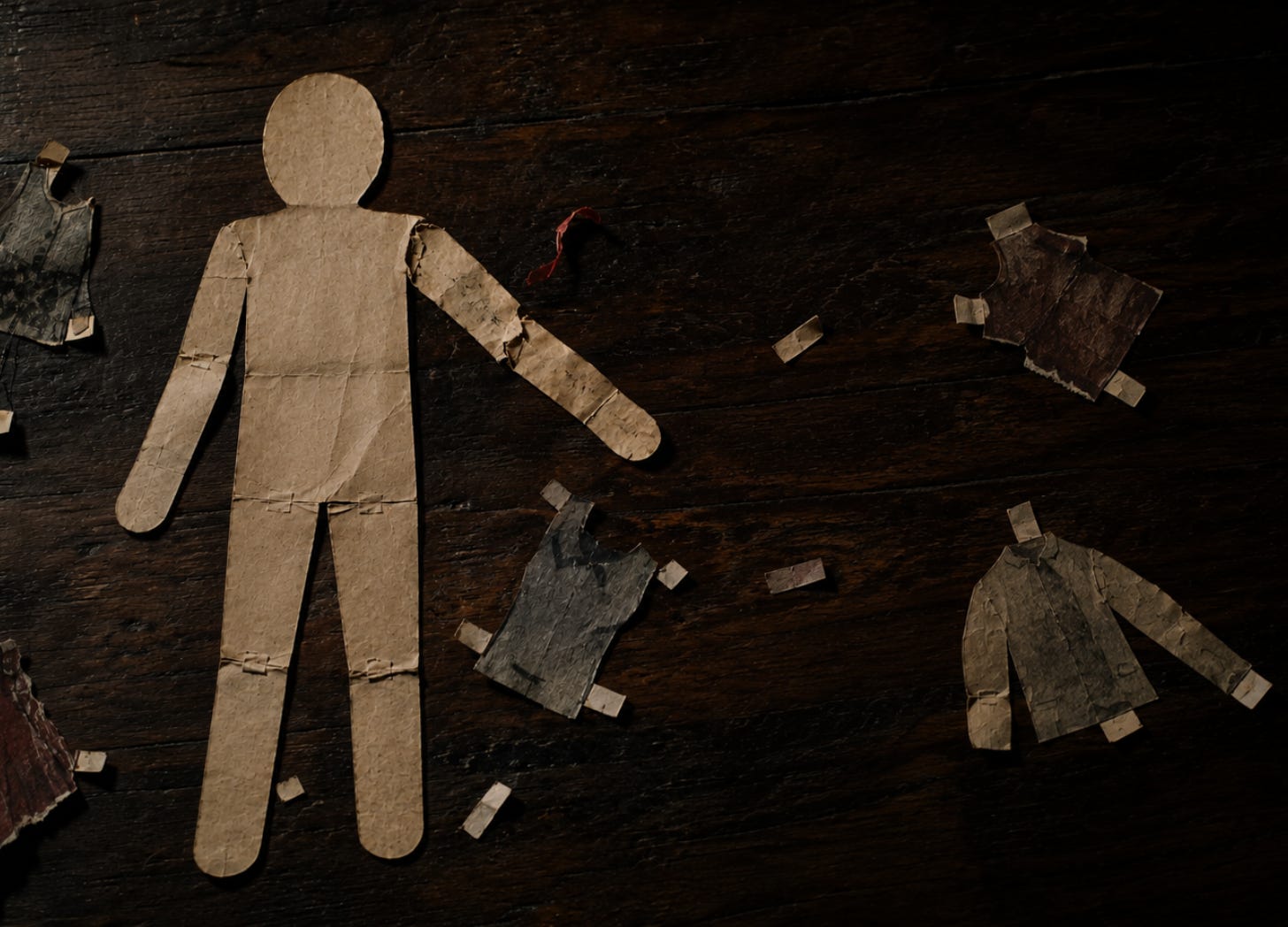
I didn’t know Jason Arday. I don’t know his family. I don’t know his struggles. What I do know is we turned him — a human — into a paper doll, a cudgel against diversity, a cudgel against academia, a cudgel against whatever it was a person wanted to argue about it.
Now, no one is responsible for someone else’s suicide — that choice is entirely their own. But if therapy and compassion can help a person who is depressed, then the converse is true, and attacks and callousness can do the opposite. And we do it with an impact that results in suffering short of death all of the time. Listen to Simone Biles, the Olympic gymnast, talk about the impact on her mental health that followed the pile-on when she had to withdraw from several finals.
Or Monica Lewinsky, who calls herself “patient zero” in internet public shaming, in part, because people were still talking about her a decade after she left the White House.
Or Sinead O’Connor, the singer and songwriter, who spoke candidly before her death in 2023 about the direct line between the backlash that came after tearing up a photo of the Pope on Saturday Night Live and her lifelong mental health struggles.
Or the singer Halsey, who has stepped back from social media because, she said, backlash had “turned into something I am not emotionally equipped to handle for the time being.”
No one is. Not when you’ve been dehumanized, and everyone is beating up that paper doll that was created of you, dressed up to both be beaten and be whatever narrative someone wants. Even if the thing that is being attacked is a work of fiction, it still stings when it carries your name and likeness.
We may never know why Arday did what he did or why he died, but, perhaps, this is a moment to — regardless of the reasons — reflect. Maybe we can spend a little more time asking ourselves whether that point we just need to make, that story we want to get on the front page or to lead the nightly news or to get us more podcast downloads, is really worth the human cost.
When I stretch my thumbs to start typing some cutting line that comes to mind, I often think back.
I once had a friend who many of us believed committed suicide. She had been a party to her own little mini scandal within her in-group. Small in the grand scheme of things, but, truly, isn’t it all? After a series of triumphs and disappointments, she died. One of my roles was to be the bringer of the sad news to many who knew her. There were those who cried on the phone because they wished they had done more. Many people wondered whether they had sent a message or returned a phone call. There were lots of tears. The strangest conversations, though, were with her former friends who had abandoned her and joined the mob. I wish I could have absolved them. I wish I could have told them that I was sure they bore no responsibility, but that would have been a lie. The best I could do was to silently forgive them on her behalf.
People have asked me why I did not kill myself after my scandal at The New York Times. I think of it pretty simply — the coin flipped, and it came up heads instead of tails.
The height of my suicidal ideation came before I resigned, and it was an impetus for my concession. But many times, in the years that followed, I wondered how those who had such sharp words for me — the former friends and colleagues, the politicians, the random opinion columnists, and so on — would feel if I had ended my life. Watching the Arday aftermath has given me a little glimpse into the answer, and it is not entirely comforting. Some would reflect, while others would become defensive. Others would have probably said, like with Arday, that I was actually murdered by DEI. It’s all absurd theater that would be unnecessary if we all could just be a little nicer.
I thought of you when I read about Arday’s death and hoped it wouldn’t be too much of a trigger. Your words here are so beautifully said, and thank you for sharing your perspective. I’m glad you survived the whole ordeal.
Wonderful article, Jayson.